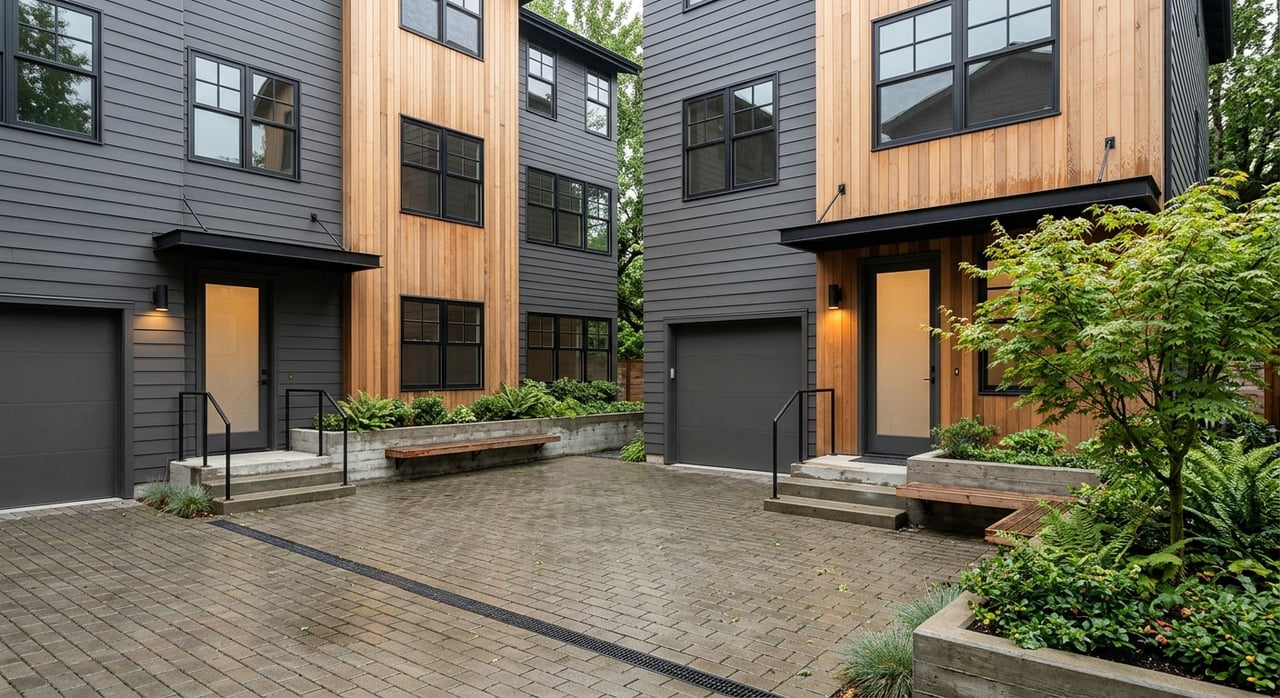
If you are deciding between a condo and a townhome in Bellevue, you are not just choosing a floor plan. You are choosing an ownership structure, a monthly cost profile, and a day-to-day lifestyle. In a fast-moving market, understanding those differences early can help you avoid surprises and focus on the option that truly fits your goals. Let’s dive in.
Why the legal structure matters
In Bellevue, the words condo and townhome do not always tell you the full story. What matters most is the legal structure behind the property, not just the label used in the listing.
Under Washington common-interest community law, a condominium is a form of ownership where you separately own your unit and also own an undivided interest in the common elements with other owners. Those common elements may include things like hallways, roofs, exterior areas, or shared amenities, depending on the project.
With attached homes marketed as townhomes, the setup can vary much more. The recorded declaration and map control what you own, what the association maintains, and whether the property is part of a condominium, plat community, or another common-interest structure. That means two Bellevue townhomes with similar layouts can come with very different maintenance obligations.
Condo vs. townhome basics
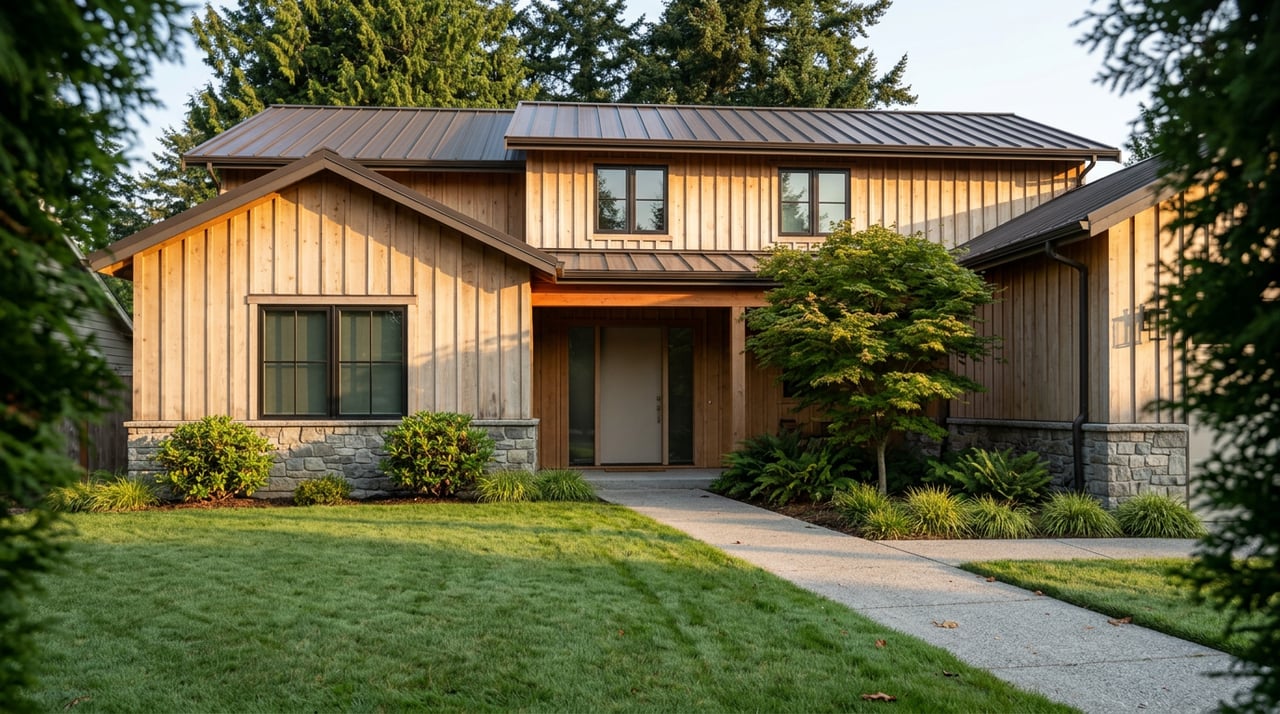
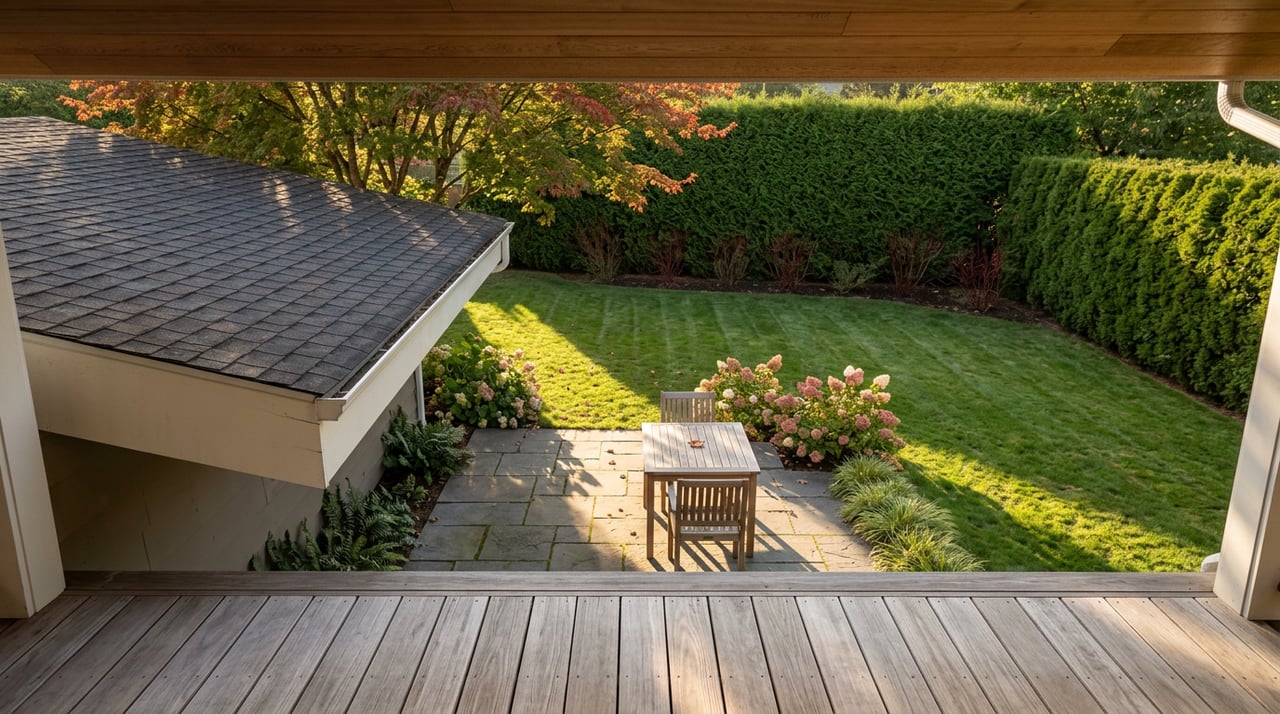
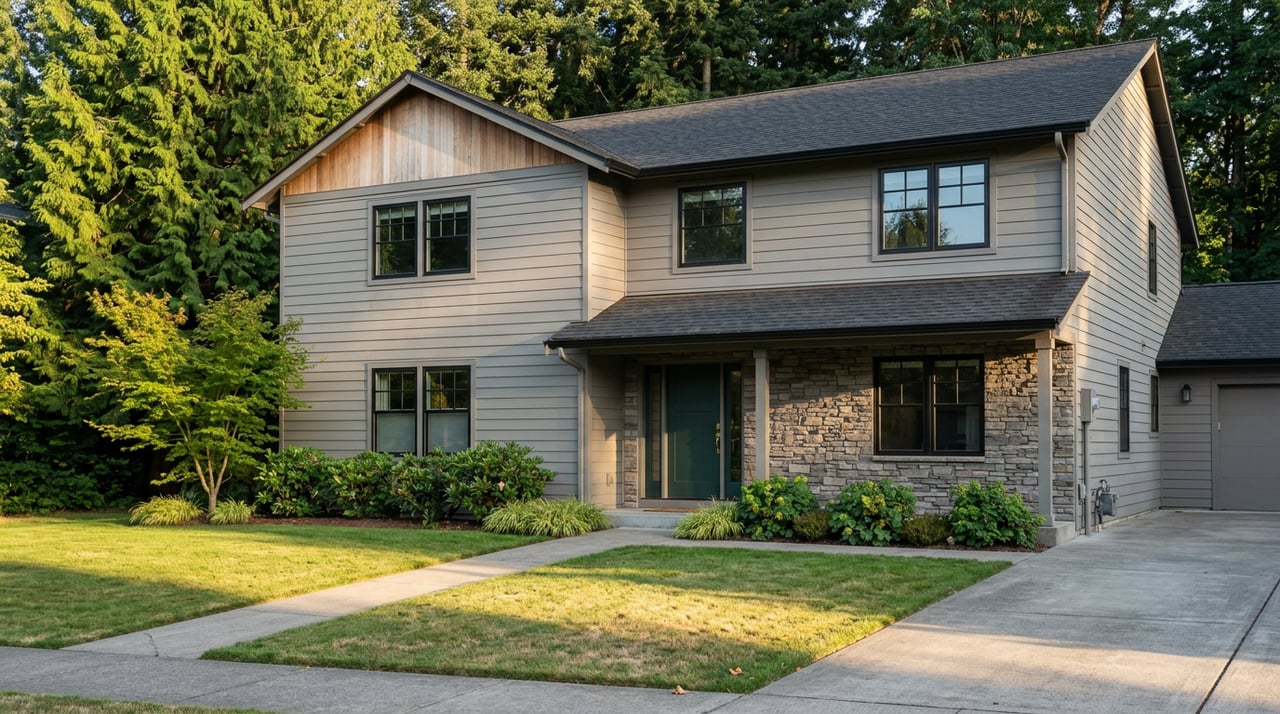
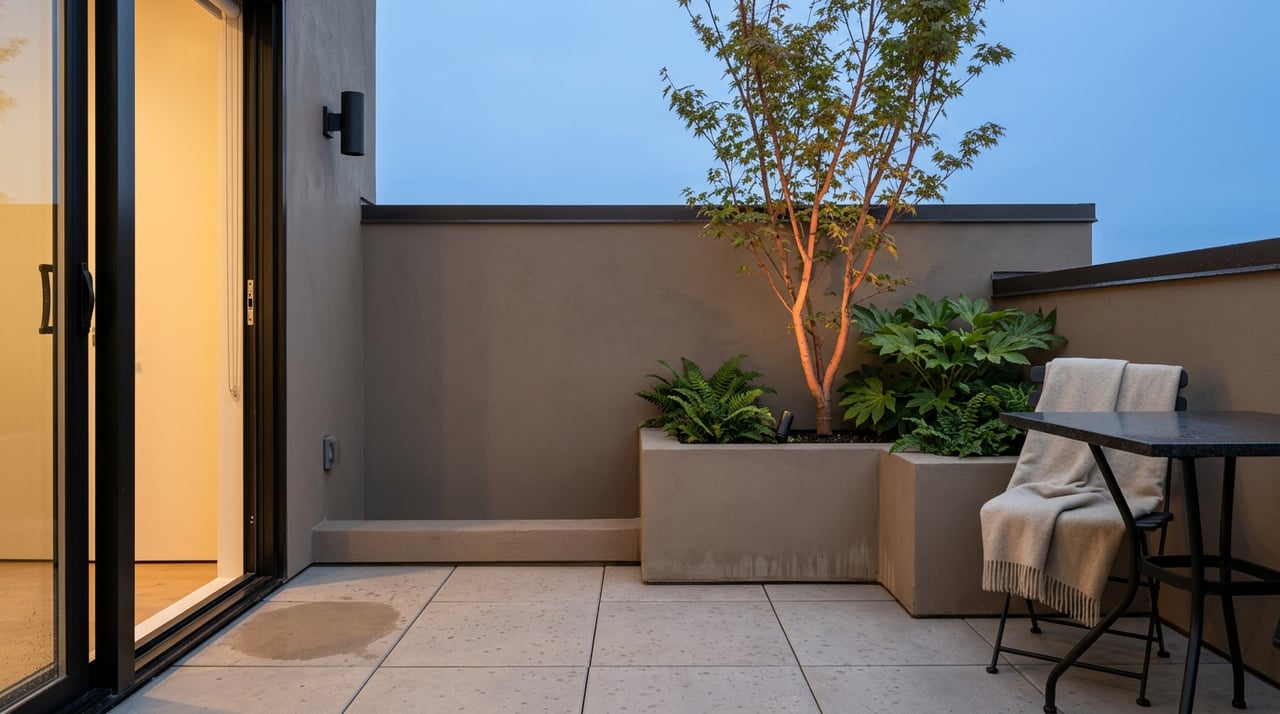
For many buyers, the practical difference comes down to space, maintenance, and monthly cost. A condo often appeals if you want lower maintenance and a more lock-and-leave lifestyle. A townhome often appeals if you want more separation, storage, or square footage while still accepting shared rules and some common upkeep.
In Bellevue’s current market snapshot, Redfin reports an overall median sale price of about $1.575 million, with condo listings showing a median asking price around $589,000 and townhome listings around $917,000. That does not mean every property fits neatly into those numbers, but it does show how condos often serve as the lower entry point while townhomes typically sit between condos and detached homes.
What you actually own
Before you fall in love with finishes or location, confirm exactly what comes with ownership. In many condos, you own the interior of your unit and share ownership of common elements with the rest of the association.
In attached homes labeled as townhomes, you may own more of the structure or land, or you may not. The declaration determines whether the roof, exterior walls, driveways, or yard areas are your responsibility or the HOA’s. Washington law makes this distinction important because a shared wall alone does not automatically create the same ownership and maintenance setup across projects.
HOA fees are only part of the picture
A low HOA fee can look attractive at first glance, but the better question is what that fee covers. Under Washington rules, the association generally maintains, repairs, and replaces common elements unless the declaration says otherwise.
That means your review should go deeper than the monthly dues amount. You want to know whether the HOA covers exterior maintenance, roof replacement, landscaping, insurance for common areas, and shared amenities. If the dues are low because the association covers less, your out-of-pocket responsibility may be higher over time.
Reserve funding matters
Reserve strength is one of the biggest details buyers should review in any condo or townhome community. In Washington, many condominium associations are required to prepare reserve studies, update them annually, and have a reserve professional complete a visual inspection at least every three years unless a hardship exception applies.
That requirement exists for a reason. A reserve study helps show whether the association is planning ahead for future major repairs and replacements. You can review the relevant Washington reserve study requirements as part of your due diligence.
If reserves are thin, you may face larger special assessments later. That is why monthly dues and reserve health should be looked at together, not separately.
Bellevue areas to consider
Bellevue offers several strong search lanes for condo and townhome buyers, and the right fit often depends on your commute, budget, and preferred daily routine.
Downtown Bellevue
Downtown Bellevue is the city’s primary economic and employment center and its fastest-growing residential neighborhood. With Sound Transit’s Bellevue Downtown Station serving the area, downtown can make sense if you value walkability, transit access, and proximity to jobs, dining, and services.
This area is especially worth watching if you want a condo lifestyle or newer attached housing close to the urban core. It can also appeal if you prefer a car-light routine and want easy access to Bellevue’s central business district.
BelRed and Spring District
Bellevue identifies BelRed and the Spring District as key growth areas, with major transit-oriented development already underway. The city also notes that a significant share of future growth is planned for Downtown, Spring District, and BelRed, according to its About Bellevue overview.
If you want newer attached housing near light rail and future development, this part of Bellevue deserves a close look. Buyers who prioritize convenience, access, and long-term growth patterns often find these neighborhoods especially relevant.
Wilburton
Wilburton sits close to downtown and is in the middle of a significant redevelopment process. It also has its own light rail station, which adds to its appeal for buyers focused on access and future connectivity.
For attached-home buyers, Wilburton can be a smart area to watch because higher-density housing fits the city’s broader planning direction there. If you like being near downtown but want to widen your search beyond the core, this may be a useful option.
Eastgate, Factoria, and Crossroads
Eastgate, Factoria, and Crossroads can work well if you want an attached-home option outside the densest urban core. City materials describe Eastgate and Factoria as areas with commercial space, retail, multifamily communities, and established residential areas, while Crossroads is one of Bellevue’s more densely populated neighborhoods.
These areas may appeal if freeway access matters to you or if you want a blend of convenience and a more spread-out neighborhood pattern. Townhome and condo buyers who want flexibility without being right in downtown often start here.
West Bellevue, Newport, Somerset, and Woodridge
West Bellevue, Newport, Somerset, and Woodridge are more established areas with strong neighborhood identity and good access to major routes like I-90 and I-405. Some also offer notable green-space or waterfront access.
If you want a more traditional neighborhood feel, townhomes in these areas may be worth exploring. They can offer a different day-to-day experience than the denser condo-focused parts of Bellevue.
How to decide what fits you
For most buyers, the condo-versus-townhome decision comes down to three things: how much maintenance you want to handle, how important walkability is versus extra space, and how long you expect to stay.
A condo may fit best if you want a lower-maintenance home, a lower entry price, or access to central Bellevue locations. A townhome may fit better if you want more room, more privacy, or a layout that feels closer to a detached home.
The best choice is usually the one whose location, monthly carrying cost, and governing documents support your long-term plan. That includes not just dues, but also reserve funding, maintenance responsibility, commute access, and resale appeal.
Bellevue buyers should move early
Bellevue remains a competitive market. Redfin’s market snapshot says homes receive about three offers on average and sell in around 10 days.
That pace means preparation matters. If you are serious about buying a condo or townhome here, it helps to line up financing, narrow your preferred areas, and be ready to review HOA documents quickly when the right property hits the market.
Due diligence before you write an offer
Before you submit an offer on a Bellevue condo or townhome, make sure you understand the documents tied to that community. In Washington, resale condo transactions generally require a resale certificate unless a public offering statement applies.
Under Washington law, the resale certificate can include information about assessments, special assessments, reserve-study status, budgets, financials, fees, and litigation. In newer common-interest communities, you may receive a public offering statement instead.
A few smart questions to answer up front include:
- What does the HOA cover?
- How healthy are the reserves?
- Are there planned or possible special assessments?
- What restrictions appear in the governing documents?
- What maintenance is your responsibility versus the association’s?
Those answers can shape both your monthly budget and your long-term comfort with the property.
Buying with a clear plan
When you buy a condo or townhome in Bellevue, the goal is not just to win a home in a competitive market. The goal is to buy the right type of home for the way you want to live and the level of responsibility you want to take on.
At Angie Holmstrom Homes, we believe clear process and careful document review matter just as much as price and location. If you want help comparing Bellevue condo and townhome options, evaluating community documents, and creating a search strategy that fits your budget and goals, connect with Angie Holmstrom.
FAQs
What is the difference between a Bellevue condo and a Bellevue townhome?
- A Bellevue condo usually means you own your unit plus an undivided interest in common elements, while a Bellevue townhome can have several different legal structures, so the recorded declaration matters more than the listing label.
What should you review in Bellevue HOA documents before buying?
- You should review what the HOA covers, reserve funding, any current or planned special assessments, fees, budgets, financials, litigation disclosures, and the maintenance responsibilities assigned to owners versus the association.
Are Bellevue condos usually cheaper than Bellevue townhomes?
- Based on a current Redfin Bellevue market snapshot, condo listings show a lower median asking price than townhome listings, which suggests condos are often the lower-entry option.
Which Bellevue neighborhoods are good for condo or townhome buyers?
- Downtown Bellevue, BelRed, Spring District, and Wilburton can appeal if you want newer attached housing and transit access, while Eastgate, Factoria, Crossroads, West Bellevue, Newport, Somerset, and Woodridge may suit buyers looking for different neighborhood patterns or more traditional residential settings.
Why does reserve funding matter when buying a Bellevue condo?
- Reserve funding matters because it helps show whether the association is planning for future major repairs and replacements, which can affect the chance of higher costs or special assessments later.