If you are looking for a real estate investment that blends property strategy with an operating business, adult family homes in Seattle deserve a closer look. This niche can be appealing, but it is also more complex than buying a standard rental house. Understanding how the property, the license, the care model, and the local rules fit together can help you make smarter decisions from day one. Let’s dive in.
Why adult family homes are different
An adult family home, or AFH, is a licensed residential home in Washington where a person or entity provides personal care, special care, room, and board to more than one and up to six unrelated adults. Under separate rules, the Washington State Department of Social and Health Services, or DSHS, may approve up to eight adults.
That definition matters because an AFH is not simply a house with tenants. It is a regulated care setting, and the provider is responsible for daily operations and resident well-being. In other words, you are evaluating both real estate and a care business.
For many first-time investors, this is the biggest mindset shift. A strong AFH investment starts with understanding that the building, staffing, licensing, safety requirements, and resident care standards all affect the value and risk of the opportunity.
Why Seattle draws AFH investors
Seattle and King County have sizable older-adult populations, which helps explain why AFH demand exists here. Census Bureau 2024 estimates show that 13.0% of Seattle residents and 14.6% of King County residents are age 65 or older.
At the same time, this is an expensive market to enter. The Census Bureau reports median owner-occupied home values of $938,600 in Seattle and $859,900 in King County. That means your acquisition strategy needs to account for both purchase price and the cost of preparing a home for licensing and operations.
This is where careful planning becomes essential. In Seattle, a property may look workable on paper, but the true fit depends on layout, safety, permitting, and your intended resident capacity.
How AFH investments make money
AFH income usually comes from more than one source. DSHS explains that Medicaid can pay providers directly for medical services in residential care settings that accept Medicaid residents, and personal care may be available for people who meet functional and financial eligibility.
In practice, revenue often includes a mix of private-pay income, room-and-board collections, and government-funded care payments. That makes payer mix a key part of underwriting. A home that depends on one payment source may have a different risk profile than one with a more balanced revenue plan.
This also means AFHs behave more like active operating businesses than passive rentals. Staffing, training, inspections, background checks, and recordkeeping all affect day-to-day performance. If you are comparing AFHs to traditional single-family rentals, that is an important difference to keep front and center.
What makes a Seattle property a fit
In Seattle, adult family homes are considered a residential use and are allowed in most zones. Even so, establishing the use or altering an existing AFH can still require a construction permit.
The City of Seattle also notes that converting a single-family residence to an AFH may trigger substantial alterations and possibly seismic upgrades. So even if the address is in a zone that allows the use, you still need to evaluate the building itself.
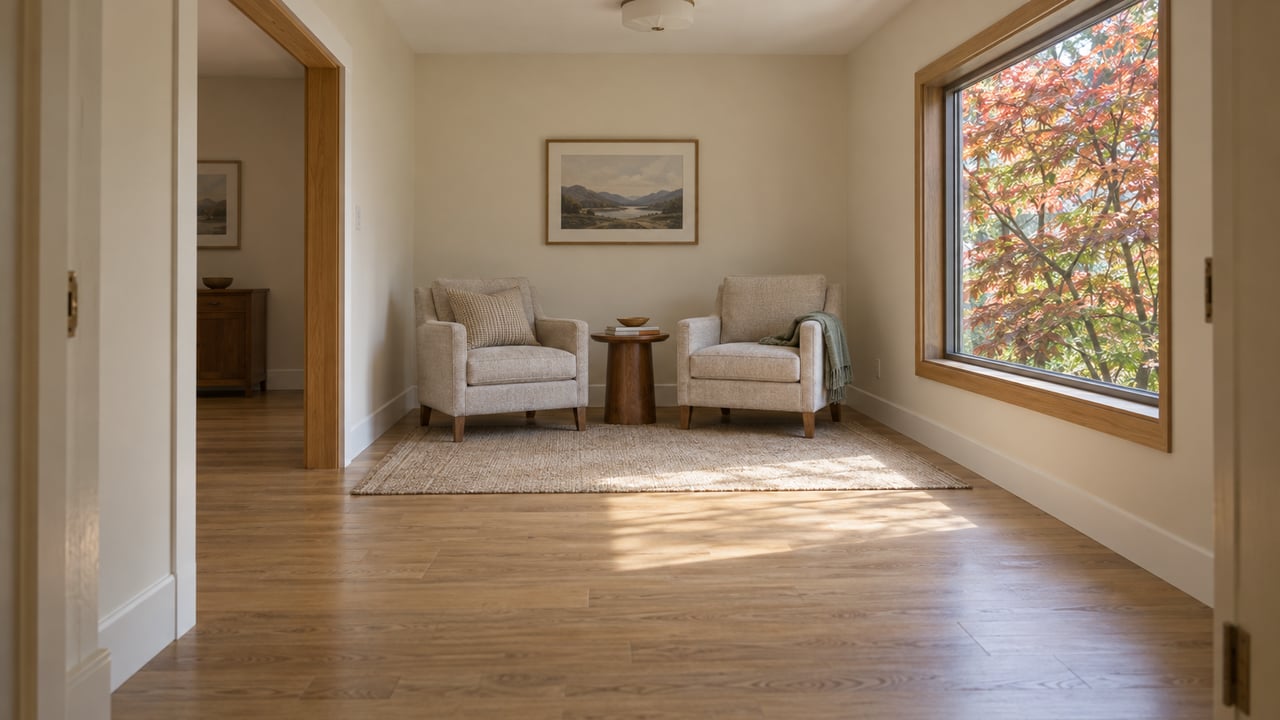
A home also needs to be ready for DSHS inspection. The state checklist says the home should be move-in ready for the initial inspection, and that visit usually takes three to five hours. Common areas must feel homelike and be large enough for all residents to use at the same time.
Bedrooms have minimum size standards as well. The checklist requires at least 80 square feet for one resident and 120 square feet for two residents, along with storage and proper egress and privacy features.
Capacity is about more than bedroom count
Many buyers assume capacity is just a square-footage question. In reality, DSHS looks at several factors when deciding whether a home can support a certain number of residents.
Those factors include the structure of the house, bathroom count and accessibility, staff qualifications, who lives in the home and needs care, adult day-care use, and the ability to safely evacuate all occupants. So a larger home does not automatically mean a higher licensed capacity.
If your plan involves expanding from six residents to seven or eight, the rules become even more specific. Seattle says a residential sprinkler system is required for that larger setup, and state rules limit seven- or eight-bed homes without an automatic sprinkler system from serving residents who need help during evacuation.
Licensing basics every investor should know
If you want to become an AFH provider in Washington, DSHS lists several baseline qualifications. These include a high school diploma or equivalent, long-term-care worker training or exemption documentation, 1,000 hours of caregiving experience, AFH Administrator training, prospective provider orientation, CPR, first aid, and food safety.
The AFH Administrator training alone is at least 54 hours and must be completed by the applicant and entity representative. That requirement gives you a sense of how involved this process can be.
Background checks are also part of the operating framework. DSHS says long-term-care workers hired on or after January 7, 2012 must have a fingerprint-based background check, and adult family homes have specific background-check procedures.
For investors, one rule stands out above the rest: the AFH license is not transferable. It is valid only for the provider and address listed on the license. If you are buying an existing AFH property, you cannot assume the current license simply carries over at closing.
Why timeline planning matters
DSHS says there is no fixed licensing timeline. Timing depends on how complete the application is and how quickly initial licensing visits can be scheduled.
That has real transaction implications. If you are buying a home with the goal of operating it as an AFH, you should leave room in your timeline for licensing, inspections, and any code or construction work that may be needed.
This is one reason many investors benefit from building their plan early. Financing, possession timing, renovation scope, and startup costs all become easier to manage when your schedule reflects the realities of the licensing process.
Due diligence steps before you buy
A good AFH acquisition starts with disciplined due diligence. Before you move forward, make sure you understand both the property and the operating framework.
Here are some of the most important checks:
- Verify that the home can support your intended licensed capacity based on DSHS factors such as structure, bathroom access, staffing, occupancy mix, adult day-care use, and safe evacuation.
- Confirm Seattle zoning and permit requirements, including whether construction permits, building review, or alteration work will be needed.
- Review the revenue plan and payer mix so you know whether the home will rely on private pay, Medicaid, or a combination of both.
- Review the current license, inspection history, required postings, and records for any compliance gaps.
- If the home will serve residents with dementia, mental health needs, or developmental-disability needs, confirm the specialty training and staffing requirements.
It is also important to work from the current rules. DSHS notes that new AFH rules took effect on January 1, 2026, to align with federal Home and Community Based Services requirements. If you rely on outdated assumptions, your underwriting and operational plan may miss key details.
Common first-time investor mistakes
One common mistake is treating an AFH like a standard rental property. That can lead buyers to focus too much on purchase price and not enough on licensing, care operations, and building readiness.
Another mistake is assuming an existing setup automatically works for your plan. A home may have operated as an AFH before, but your intended resident mix, staffing structure, or target capacity can change what is required.
A third mistake is underestimating the number of moving parts. Because these transactions sit at the intersection of real estate, licensing, staffing, and reimbursement rules, buyers often need a broker with AFH experience plus legal, accounting, and operational advisors.
A practical way to get started
If you are exploring your first AFH investment in Seattle, start by defining your operating model before you shop for properties. Think about the capacity you want, the payer mix you expect, whether you plan to serve residents with special needs, and how much renovation or code work you are prepared to take on.
Next, evaluate each property through both a real estate lens and an operations lens. A home may have the right location and price, but if the layout, bathroom access, inspection readiness, or permit path do not support your business plan, it may not be the right investment.
Finally, build a team that understands this niche. In a specialized asset class like adult family homes, careful guidance can help you avoid expensive surprises and move with more confidence.
If you want help evaluating AFH opportunities in Seattle or across the Puget Sound region, Angie Holmstrom offers practical, detail-focused guidance for buyers, sellers, and investors navigating this specialized market.
FAQs
What is an adult family home in Washington?
- An adult family home in Washington is a licensed residential home that provides personal care, special care, room, and board to more than one and up to six unrelated adults, with up to eight possible under separate DSHS approval rules.
Can you buy a Seattle house and automatically use it as an AFH?
- No. Even though adult family homes are allowed in most Seattle zones, a property may still need permits, alterations, inspections, and licensing before it can operate as an AFH.
Is an AFH license transferable when you buy a property?
- No. Washington rules state that the AFH license is not transferable and is valid only for the provider and address listed on the license.
How do adult family homes in Seattle generate income?
- AFH revenue often comes from a mix of private-pay income, room-and-board collections, and government-funded care payments, depending on the home’s payer mix and resident eligibility.
What bedroom size is required for an AFH in Washington?
- DSHS inspection guidance requires at least 80 square feet for one resident and 120 square feet for two residents, along with storage and proper egress and privacy features.
What should Seattle AFH investors review before closing?
- Buyers should review licensed capacity factors, Seattle permit requirements, payer mix, inspection history, compliance records, and any specialty training needs tied to the residents the home will serve.